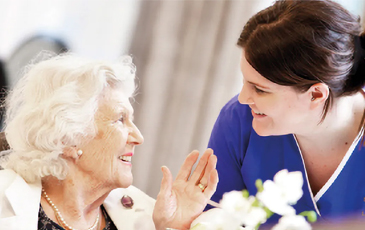
When someone moves into a care home, their circumstances can change over time. They may need more support with their health, require nursing care or need additional help because of dementia. A continuum of care means that a person's support can be reviewed and adapted as their needs develop. For families, it provides an important way to think about whether a care home can continue to meet their loved one's needs over time.
What Is Continuum Of Care?
The word continuum describes something that changes gradually across a range rather than being divided into separate stages. In a care setting, a continuum of care means that a person's support can be reviewed and adapted as their needs change. For example, someone may initially need residential care but later require nursing care or additional support as their health or circumstances develop.
This is important because care needs can change over time. A person's mobility, health or ability to manage everyday activities may alter, meaning the support they need may also need to change. Regular care reviews help ensure that support remains appropriate and continues to reflect the person's individual needs.


Why Care Needs Can Change In A Care Home
There are many reasons why someone's care needs may develop. Changes in mobility can mean that a resident needs more assistance around the home when moving from room to room. A new health condition that has developed may require additional clinical support from compassionate nurses. Someone living with dementia may need greater supervision or a different approach to communication.
There can also be less obvious changes too, some that are not always apparent, for example, a resident may become less confident going out independently or find changes to their routine more difficult. They may need more encouragement to take part in activities or require additional support with everyday decisions.
Any changes in someones care needs are individual to them, and this is why care should be based on regular assessments and conversations. Rather than assuming that someone's original care plan will remain suitable indefinitely.
What Does Continuity Mean For Residents?
Continuity is partly about making sure important information does not get lost as care changes. When staff understand a resident's usual routines and preferences, they have more information to work with when providing day-to-day support.
This could include knowing how someone likes to start their morning, what helps them feel comfortable or which activities they enjoy. Relatives can also provide valuable information, particularly when someone has recently moved into a care home.
Continuity also involves communication between members of the care team. When a resident's needs change, relevant information needs to be recorded and shared so that staff understand what has changed and what support is now required.

How Does Continuum Of Care Relate To The CQC?
The Care Quality Commission regulates health and social care services in England. Its assessment framework considers whether services are safe, effective, caring, responsive and well-led.
The CQC's guidance on person-centred care states that people should be involved in decisions about their care and that providers should respond to changes in their needs. It also highlights the importance of involving people close to someone receiving care where appropriate.
This is relevant to a continuum of care because care should not be treated as something that is decided once and then left unchanged. If a resident's circumstances alter, their support may need to be reconsidered.
The CQC's assessment framework includes person-centred care within its approach to assessing whether services are responsive to people's individual needs. This does not mean the CQC expects every care home to provide every form of care. The specific services available will depend on the home and the needs it is registered and equipped to support.
Why Does This Matter When Comparing Care Homes?
Families often have a lot to consider when looking for a care home. Location, visiting arrangements, staffing, accommodation and activities may all form part of the decision. When visiting care homes it is also worth asking what happens if a person's needs change after they move in.
For example, if someone initially receives residential care, families can ask whether the home also provides nursing care. If their loved one has dementia, they may want to understand how the home adapts support as dementia progresses. These questions can help families understand how a care home approaches changing needs rather than only looking at the care that is available on the day of their visit.


What Can A Continuum Of Care Look Like?
There is no single route that applies to everyone, as one resident might remain in residential care for many years with relatively little change to their support. Another may develop health needs that mean nursing care becomes appropriate.
Someone else may move into a home for a short respite stay following a period of illness. They may then return home or decide that longer-term care is more suitable.
For a person approaching the end of their life, the focus may move towards palliative care. This can involve managing symptoms, maintaining comfort and supporting the resident and their family.
These examples show why care needs to remain flexible within care homes in the UK. The purpose is not to predict exactly what will happen but to have a process for responding when something does change.
Continuum Of Care At Haling Park Care Home
Haling Park Care Home in South Croydon provides several types of care, including residential care, nursing care, dementia care, respite care and palliative care.
This means that families can discuss their loved one's current requirements while also understanding what other forms of support are available at the home. In a good care home care planning will remain specific to the individual and a resident's support should reflect their health needs alongside their personal preferences and everyday routines.
Families can also contribute useful information. They may know how their loved one communicates, what they enjoy doing or what helps them feel settled. Keeping this information current can help the care team understand the person they are supporting.
Continuum Of Care Is About Responding To Change
A person's care needs are not necessarily fixed when they first enter a care home. A continuum of care provides a way of thinking about how support can adapt as circumstances develop. It also highlights the importance of good care planning, communication and family involvement.
For families, understanding this approach can make it easier to ask the right questions when comparing care homes. At Haling Park Care Home, different forms of care are available for people with different needs, with support centred around the individual. If you would like to learn more about care at Haling Park Care Home, our team would be happy to speak with you.